
 Digital Guider
EPDM roofs are known for their durability and resistance to harsh weather. However, small tears, loose seams, and damaged flashing can let water enter a building without clear signs on the roof surface. Finding these hidden leaks early helps prevent costly repairs and damage to ceilings, insulation, and roof decking.
With EPDM roof repair in Queens, NY, City Suburb helps property owners address membrane problems through careful roof inspections and targeted repairs.
How Do Professionals Find Hidden EPDM Roof Leaks?
Roofing professionals use a planned inspection process to trace water entry points. Since water can travel beneath the membrane before appearing indoors, the visible stain may not mark the source of the leak.
1. Inspect Seams and Membrane Edges
EPDM roofing membranes use seams to join sheets across the roof. Over time, poor bonding, weather exposure, or movement can weaken these joints. Roofers examine seam edges, corners, and membrane overlaps for gaps, lifting, and signs of separation. They also check areas where the membrane meets walls and roof edges.
2. Check Flashing and Roof Penetrations
Vents, pipes, drains, and rooftop equipment create openings where water can enter if the seals fail. Professionals inspect the flashing and membrane around each penetration for cracks, loose edges, and worn sealant. These areas need close attention since small defects can allow water to reach the layers below.
3. Look for Blisters, Punctures, and Surface Damage
Foot traffic, falling branches, sharp debris, and weather can damage EPDM membranes. Roofers look for punctures, cuts, bubbles, wrinkles, and areas where water collects. They also inspect patches from earlier repairs, as a weak patch may allow moisture to enter again.
4. Trace Indoor Water Stains
Water stains on ceilings, damp insulation, peeling paint, and musty odors can point to a roof leak. However, water may travel along roof decking or structural parts before reaching the room below. Professionals compare indoor signs with roof conditions to narrow down the likely entry point.
Which Tools Help Locate Hidden Leaks?
Visual checks may not reveal every leak. Depending on the roof’s design and condition, professionals may use additional testing methods.
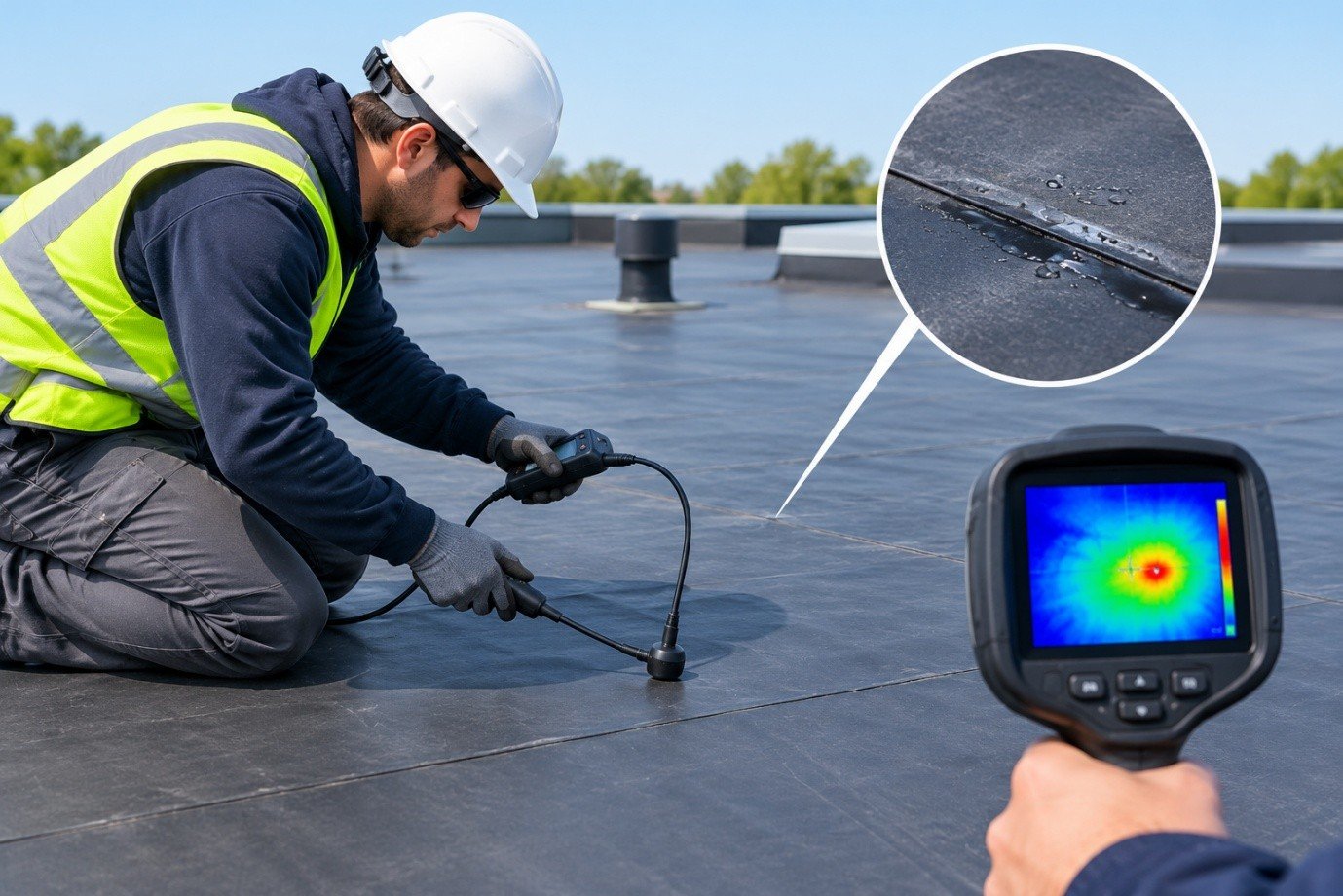
- Moisture meters: These devices help identify damp materials beneath the roof surface.
- Infrared scans: Thermal imaging can reveal temperature patterns linked to trapped moisture, though results may need confirmation.
- Electronic leak detection: Suitable methods can help locate membrane breaches, depending on the roof assembly and test conditions.
- Controlled water testing: Roofers may test selected areas to trace a leak, taking care not to cause further water damage.
The right method depends on the membrane, insulation, roof structure, and suspected leak location.
Why Timely EPDM Leak Detection Matters
A small opening can allow moisture to spread beneath the membrane. Over time, trapped water may damage insulation, weaken roof components, encourage mold growth, and raise repair costs. Early inspections help property owners address the source before the damage spreads.
For EPDM roofing in Brooklyn, NY, City Suburb can help identify membrane defects and determine whether a local patch, seam repair, flashing repair, or broader restoration is needed. A proper diagnosis helps avoid repairs that treat only the visible symptoms.
How Can Property Owners Reduce Leak Risks?
Regular roof checks can help catch early signs of damage. Property owners should arrange inspections after severe weather, keep drains clear, and limit unnecessary foot traffic on the membrane. Any visible puncture, loose seam, or recurring indoor stain should receive prompt attention.
Professional inspections also help assess older repairs and areas around rooftop equipment. Avoid pulling at the membrane or applying random sealants, as unsuitable products can worsen the problem or interfere with future repairs.
Frequently Asked Questions
1. Can an EPDM roof leak without visible damage?
Yes. Water can enter through small seam gaps, flashing defects, or punctures hidden by debris. It may travel beneath the membrane before appearing indoors, so a professional inspection can help locate the source.
2. How do roofers find leaks beneath EPDM membranes?
Roofers inspect seams, flashing, penetrations, and damaged areas. If the source remains unclear, they may use moisture meters, infrared scans, or electronic leak detection, depending on the roof assembly and site conditions.
3. Can a small EPDM leak cause serious damage?
Yes. Even a small leak can wet insulation and roof decking over time. Continued moisture may lead to mold, material decay, and higher repair costs, so prompt assessment is important.
4. How often should an EPDM roof be inspected?
Arrange professional inspections at least once a year and after severe weather. More frequent checks may be useful for older roofs, buildings with recurring leaks, or roofs exposed to heavy foot traffic.
5. Can every EPDM leak be repaired with a patch?
No. A patch may work for isolated punctures or small tears, but separated seams, damaged flashing, or widespread membrane deterioration may need a different repair plan after inspection.
Contact City Suburb for EPDM Roof Repair
Found signs of a roof leak or suspect hidden membrane damage? City Suburb can help identify the source and recommend the right repair for your roof.
Contact us today to schedule an inspection and protect your building from further water damage.