Flat Roof Basics: Pros, Cons, and Maintenance Tips Every Owner Should Know

June 29, 2026

You walk into the upstairs room after a hard rain and there it is. A brown ring spreading across the ceiling, or a soft spot you can press with your thumb. Maybe you climbed up to clear leaves and noticed water sitting in a shallow pool that has not moved in two days. That standing water is the one thing you need to understand about a flat roof, because it sits where a sloped roof would have already shed it. A flat roof is not actually flat, and its whole job is to move water off slowly. The moment that water stops moving, trouble starts.


After climbing onto hundreds of these roofs over the years, we can tell you most flat roof problems are slow and quiet long before they show up on your ceiling. The membrane fails at a seam. A drain clogs. Flashing pulls loose where the roof meets a wall. None of it announces itself. That is both the good news and the bad news, because a flat roof rewards owners who look and punishes the ones who wait.

What a Flat Roof Actually Is

A flat roof is never truly flat. Every one we install or inspect carries a slight pitch, usually around a quarter inch of drop for every foot, so water has somewhere to go. The surface you see is a waterproof membrane stretched over insulation and a deck, sealed at every seam and every edge. On a sloped shingle roof, gravity does most of the work. On a flat roof, the membrane does all of it. That single difference shapes everything else you are about to read.

The Real Advantages of a Flat Roof

Flat roofs earn their place for reasons that have nothing to do with looks. Usable space is the big one. A flat surface gives you room for an HVAC unit, a deck, solar panels, or a rooftop garden without fighting a slope. Installation moves faster and safer because crews are not balancing on a 30 degree pitch. And when something does go wrong, the repair is usually easier to reach, since we can walk the whole surface instead of working off ladders and harnesses.


There is a quieter benefit too. On a building with several units or a wide footprint, a flat design keeps the roofline low and the ceilings open. For a lot of owners, that extra headroom and that flat deck up top are worth more than any pitched roof ever offered.

The Drawbacks You Should Know About

Standing water is the price you pay for that flat profile. Even with proper pitch, a low spot can hold a puddle long after the rain stops, and sitting water is the slow enemy of any membrane. Over months and years it wears down the surface, finds the smallest seam, and works its way into the insulation. By the time it reaches your ceiling, the damage above is often far wider than the stain below.


Drainage is the other weak point. A flat roof leans on drains, scuppers, and gutters that clog easily with leaves, grit, and debris. One blocked drain after a heavy storm can leave hundreds of gallons sitting on a surface that was never meant to act as a pool. Add the weight of wet snow in winter, and a neglected flat roof can carry a load it was never sized to hold.

Knowing Your Membrane

The membrane on your roof is probably one of a handful of types, and knowing which one you have changes how you care for it. EPDM is a black rubber sheet, tough and long lasting, common on homes and small buildings. TPO is a lighter colored single ply that reflects heat and shows up on most newer installs. Modified bitumen is an asphalt based system, rolled or torched down in layers. Built up roofing, the old tar and gravel approach, still sits on plenty of older buildings.


Each one fails in its own way. Rubber shrinks and pulls at the seams. TPO can split along weld lines. Asphalt systems blister and crack as they dry out with age. The first thing we identify on any inspection is the membrane, because the fix for a seam on rubber looks nothing like the patch for a blister on bitumen.

Maintenance That Actually Keeps Water Out

Flat roofs respond well to attention, and most of the work costs you nothing but time. Think of upkeep on three rhythms.


Every month, and especially after a storm, look up at your ceilings and walls for fresh stains, then confirm that water is draining off the roof rather than pooling. A slow walk around the building with your eyes up takes five minutes.


A few times a year, clear the drains, scuppers, and gutters by hand. Leaves and grit are the number one cause of the puddles we find, so clearing them is the single most useful thing you can do. While you are up there, scan the seams and the flashing where the roof meets walls, vents, and skylights. Lifted edges and open seams are where leaks begin.


Once a year, bring in a trained eye for a full inspection. We probe soft spots, check the membrane for shrinkage and cracking, and reseal any flashing that has started to pull away. Catching a failing seam in spring is a small job. Finding it in your living room ceiling in February is not. One seasonal habit matters more than people expect: before winter, clear every drain so melting snow and ice have a clean path off the roof.

Mistakes Owners Make

The most common mistake is treating a flat roof like a pitched one and assuming it will shed water on its own. It will not. It needs the drains kept clear, and skipping that is what turns a dry roof into a wet ceiling.


A close second is the DIY patch gone wrong. We see roofs where someone smeared the wrong sealant over a seam, trapped moisture underneath, and turned a ten minute fix into a torn out section. Patching material has to match your membrane, and a patch over a damp surface never holds. If you are not sure what your roof is made of, that is the moment to stop and ask rather than guess.


The last one is waiting. A small stain feels like something you can deal with later. On a flat roof, later usually means the water has already traveled along the deck and soaked the insulation well beyond the spot you can see.

Mistakes Owners Make

  • How long does a flat roof last?

    Most flat roofs run 10 to 25 years, depending on the membrane and upkeep. Rubber and modified bitumen tend to last longest. Neglected drains and standing water cut that short, so regular maintenance is what protects the lifespan you were promised.

  • Is standing water on a flat roof normal?

    A little water right after rain is fine. Water still sitting 48 hours later is not. Persistent ponding points to a clogged drain or a low spot, and over time it breaks down the membrane. Clear the drains first, then have the pitch checked.

  • Can I repair a flat roof leak myself?

    Small, accessible patches are doable if your sealant matches the membrane and the surface is dry. But finding the real source is the hard part, since water travels far from where it enters. If you cannot trace it or the area feels soft, call us.

  • How often should a flat roof be inspected?

    Once a year at minimum, plus a quick look after any major storm. Spring is ideal, since winter ice and snow expose weak seams. A yearly professional inspection catches small failures early, while a clogged drain or lifted edge you can spot yourself any month.

  • Does cold weather damage a flat roof?

    Freezing weather is hard on flat roofs. Water that pools and then freezes expands into seams and cracks, prying them open a little more each cycle. Heavy wet snow adds weight, and blocked drains let meltwater back up under the membrane. Clear drains before winter.

Dependable Flat Roof Inspections That Catch Trouble Early

The core rule with any flat roof is simple: keep the water moving and keep the drains clear, and the membrane will give you the years it was built for. The trouble is that a flat roof hides its problems until they reach your ceiling, which is why a trained eye once a year is worth far more than a repair after the fact. With several years of experience, we know how to identify early warning signs before they become expensive structural issues.


That is the work we do every day at City Suburb Inc. We inspect, maintain, and provide flat roof repair for homeowners and building owners across Queens, NY, and the surrounding areas. If water is pooling up top or staining the ceiling below, reach out to us and we will take a look before it spreads.
Roofing worker using a heat gun to seal black membrane on plywood roof deck
May 15, 2026
In the world of flat roofing, EPDM (Ethylene Propylene Diene Monomer) has gained significant popularity as a go-to solution for both residential and commercial buildings. Known for its durability, cost-effectiveness, and versatility, EPDM roofing offers a range of benefits that make it an ideal option for flat roofs.
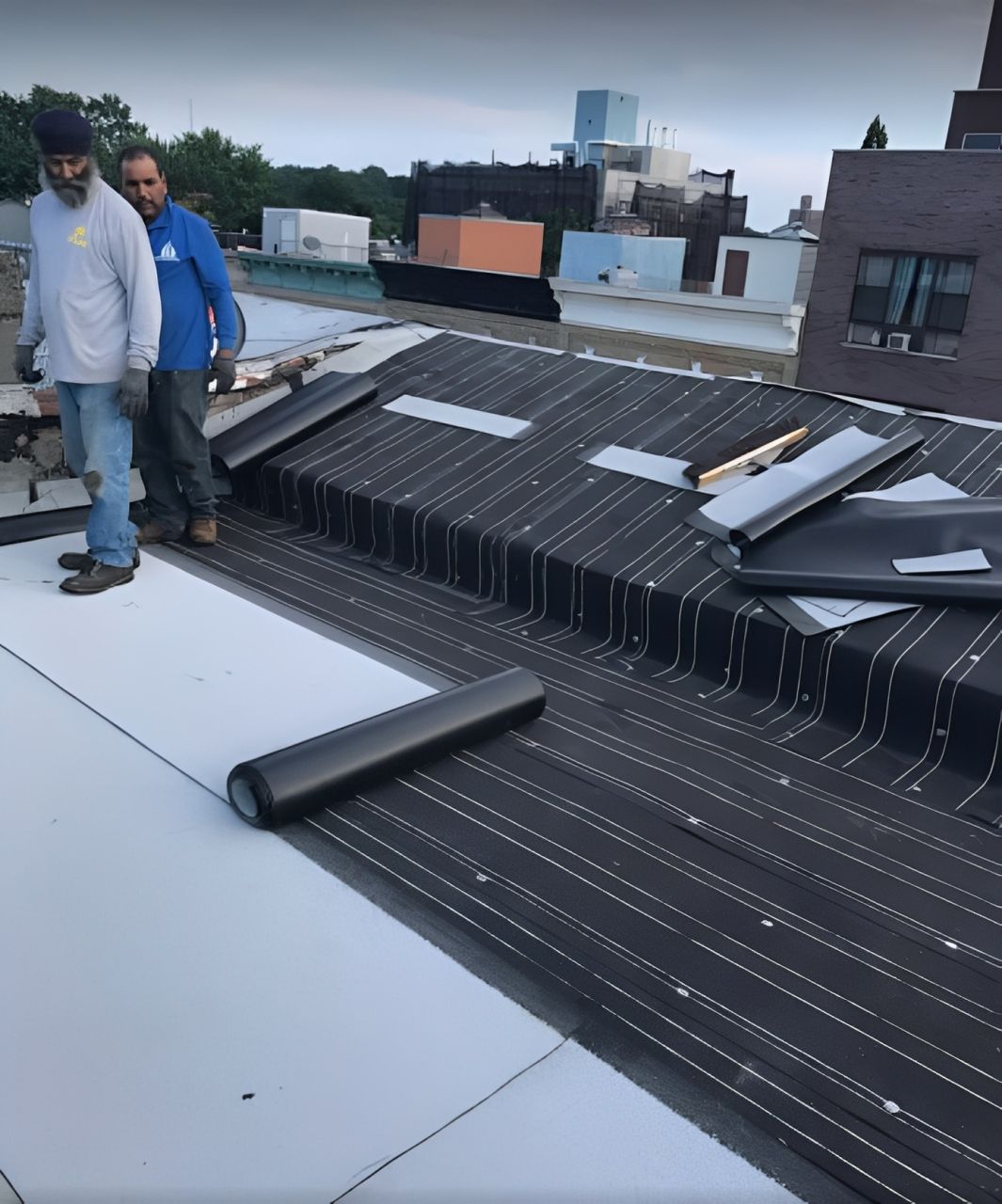
Workers installing roofing on a flat rooftop with black underlayment and rolled materials spread out.
April 30, 2026
In the world of roofing, innovation is key to providing long-lasting, efficient solutions. Rubber roofing, particularly EPDM (Ethylene Propylene Diene Monomer), has gained prominence as one of the most reliable and cost-effective roofing materials, especially for flat or low-slope roofs.
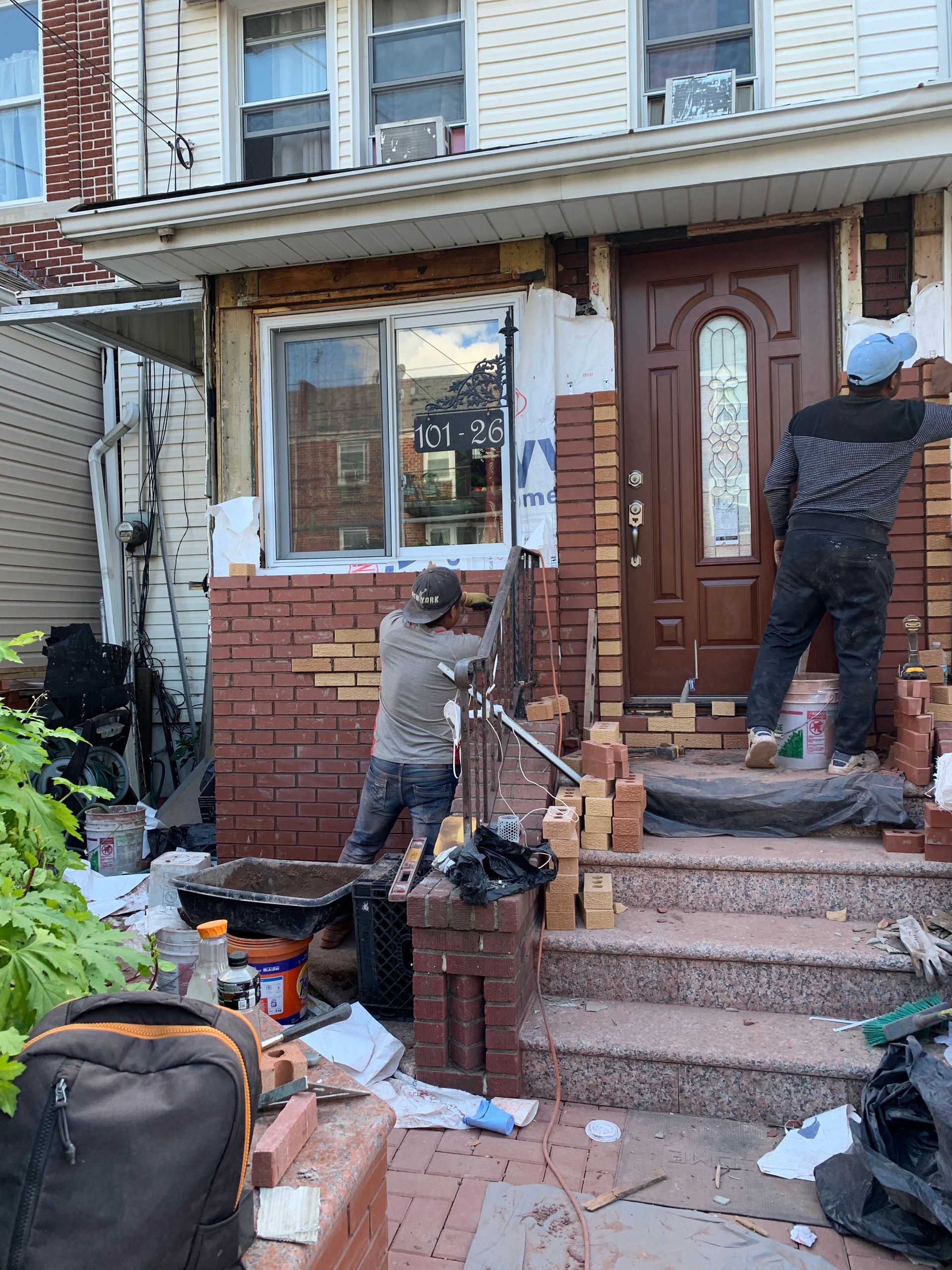
Two people working on a home exterior, installing brick facade and trim around a brown front door and window.
March 26, 2026
Discover our roof repair process: fast, reliable, and efficient solutions designed to protect your property from damage and weather.
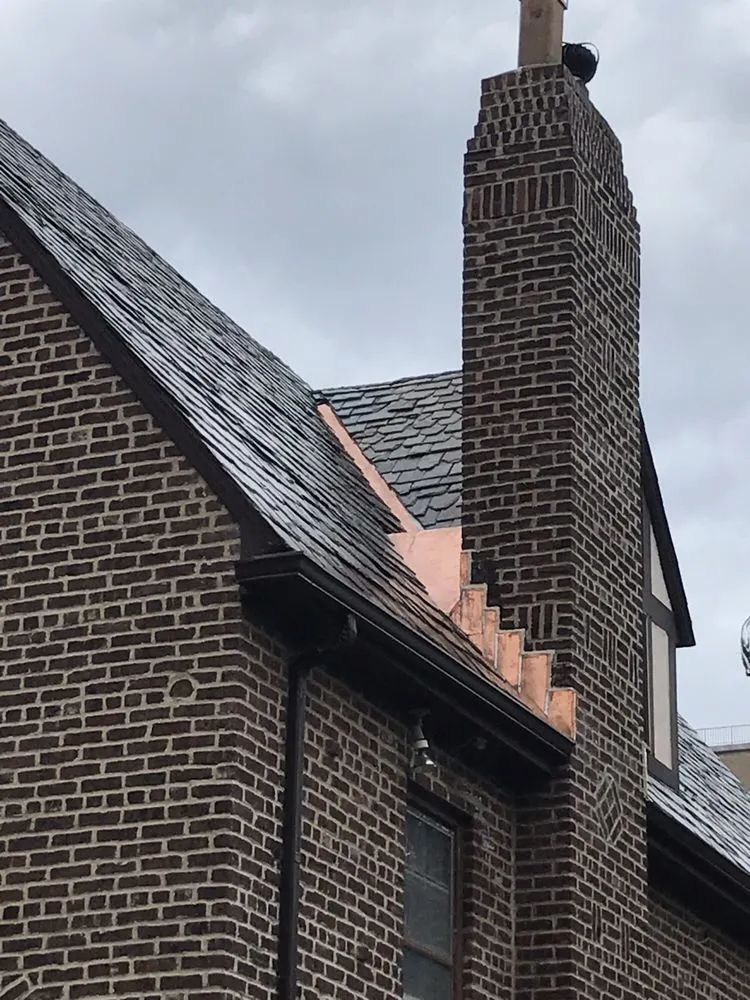
Brick building with slate roof, copper flashing, and chimney against a cloudy sky.
February 28, 2026
Your roof is more than just a protective layer over your home—it’s a vital component that shields your family, belongings, and property value from the elements. Over time, exposure to harsh weather conditions, aging materials, and wear and tear can compromise your roof’s integrity.
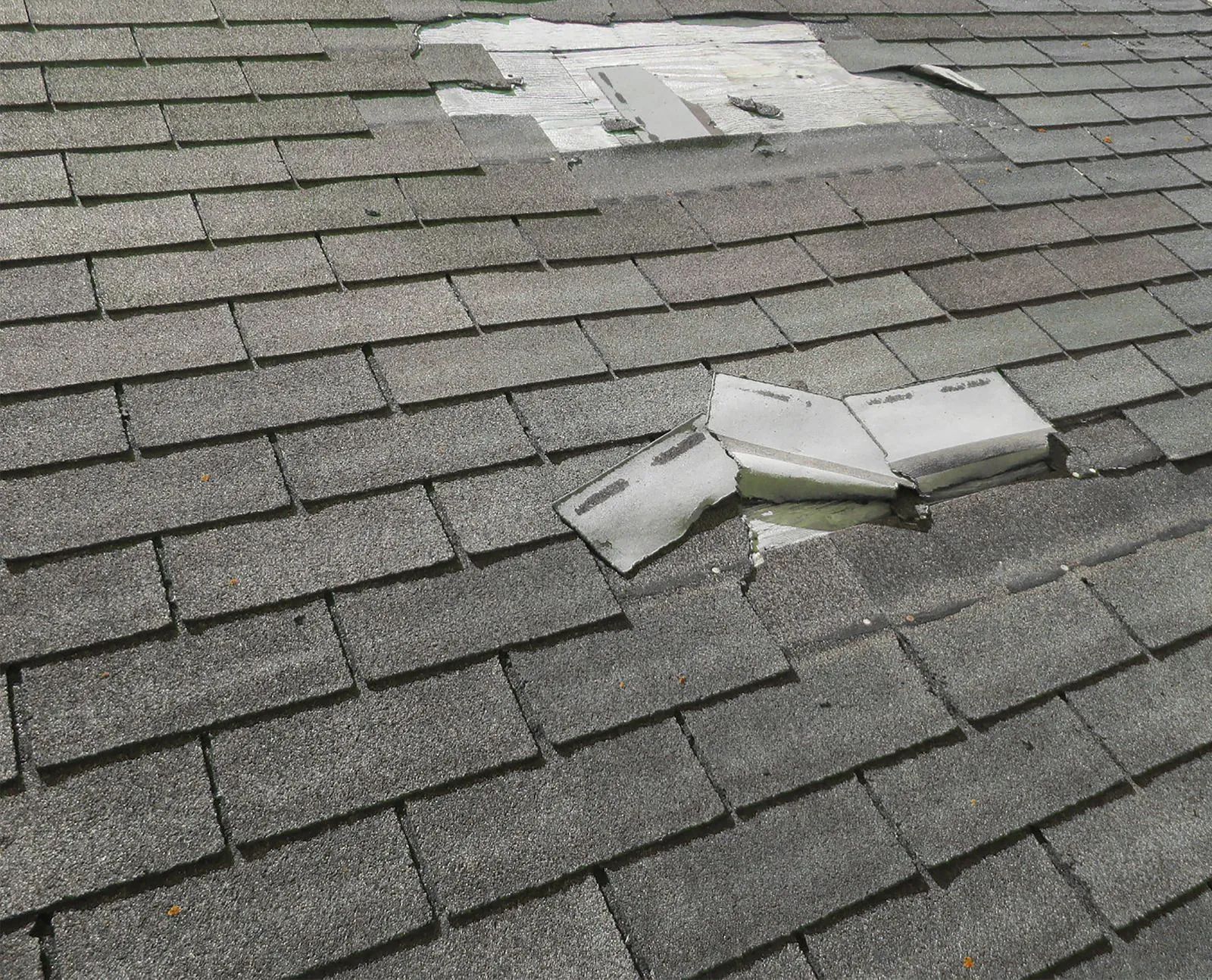
Damaged asphalt shingle roof with missing shingles. Gray, weathered texture with visible underlayment.
January 28, 2026
Your roof is more than just a structural necessity—it’s your home’s first line of defense against the elements. Yet, many homeowners unknowingly neglect minor roof issues, assuming they are harmless or will resolve on their own.
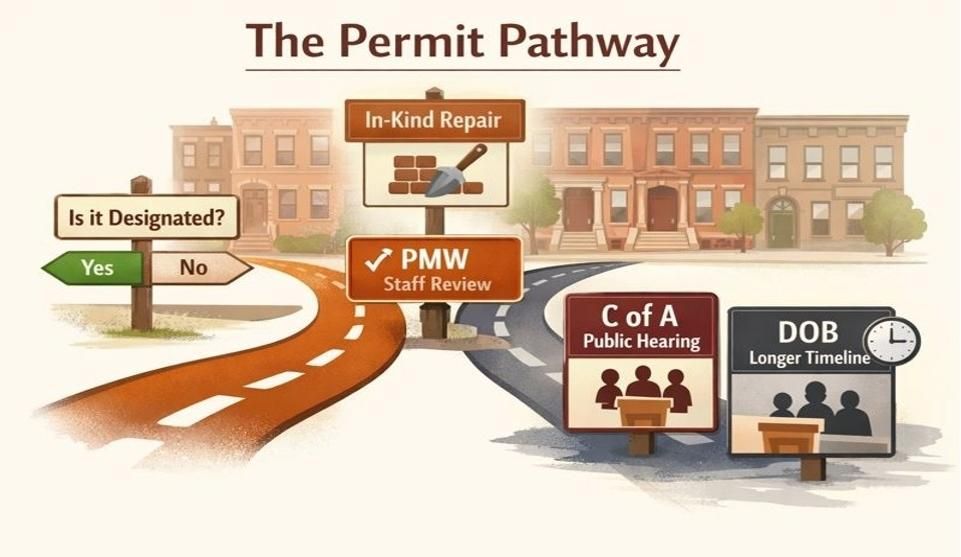
Decision flow: Is it designated? Leads to PMW (staff review) or C of A/DOB (public review).
By City Suburb Insights Team January 22, 2026
Verify your brownstone's landmark status using the LPC map before calling contractors—designation and repair scope determine which permit pathway you need.
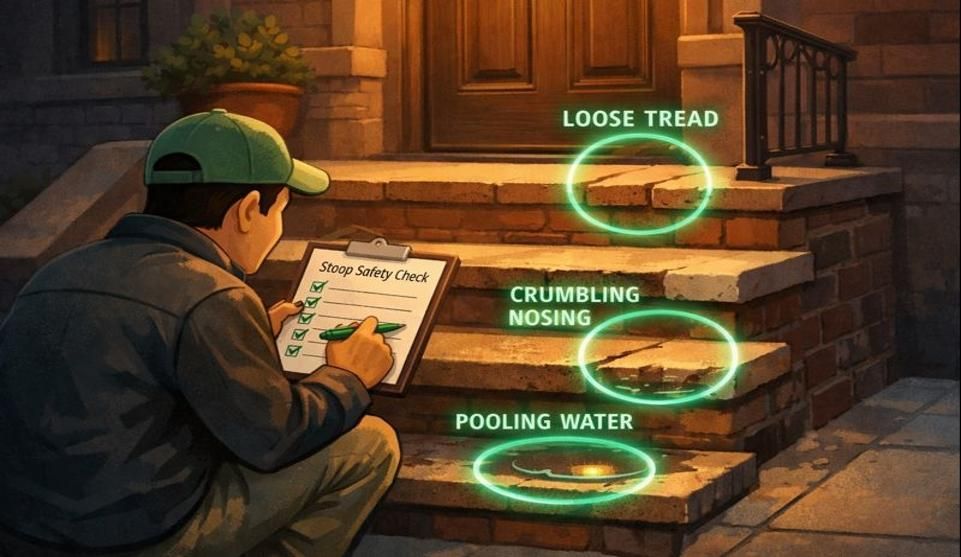
Stylized brownstone stoop with checklist highlighting loose treads, crumbling edge, pooling water.
By City Suburb Insights Team January 15, 2026
Assess brownstone stoop safety using 9 warning signs—from loose treads to crumbling edges—then choose patching, resurfacing, or replacement based on damage type.
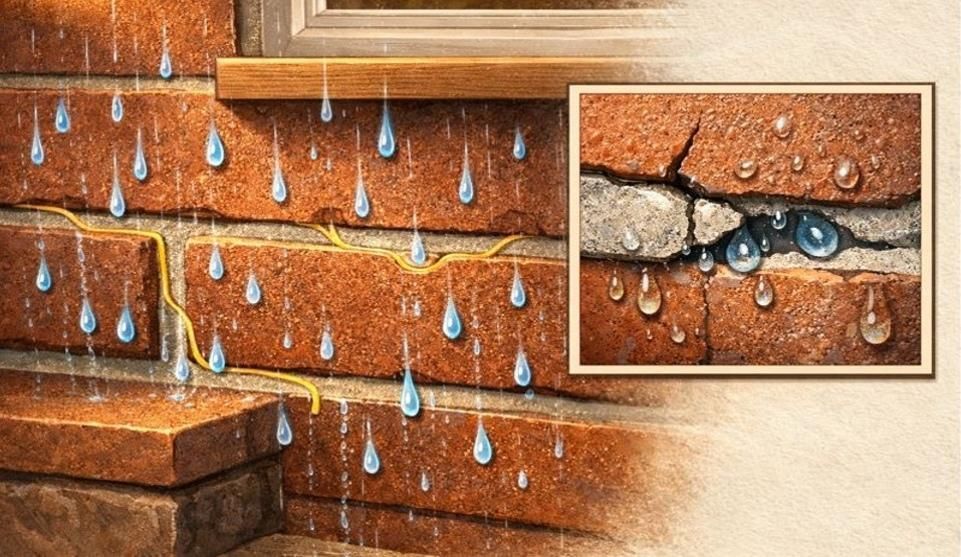
Illustration of mortar channels shedding water from a brownstone façade, preventing spalling.
By City Suburb Insights Team January 8, 2026
Brownstone façades deteriorate when water penetrates cracks and joints. Prevent spalling through runoff control, gentle cleaning, and seasonal inspections.
Tan house with brown shingled roof, white trim, and a garage door under a clear blue sky.
January 5, 2026
Roofing contractor services in Glendale, NY play a critical role in protecting homes and commercial buildings from constant urban and weather exposure. Roof systems shield properties from rain, snow, wind, and temperature extremes common in New York City. In a dense neighborhood like Glendale, roofing must also manage runoff, insulation efficiency, and structural load. Flat roofs , rubber systems, and masonry-integrated designs are common across residential and mixed-use buildings. Proper roofing ensures safety, prevents interior damage, and preserves long-term structural integrity. Whether replacing aging materials or repairing storm damage, professional roofing services directly impact property performance, comfort, and value in Glendale’s tightly built environment. Hiring a professional roofing contractor is essential for navigating New York’s building conditions, codes, and climate challenges. Improper roofing work often leads to leaks, heat loss, drainage issues, and costly structural deterioration. Experienced contractors understand how older buildings, shared walls, and flat roof designs behave over time. Professional roofing ensures compliance with city regulations, safe installation practices, and correct material selection for local exposure. Skilled oversight also prevents recurring repairs caused by shortcuts or mismatched systems. In Glendale, where many structures share close proximity, professional execution protects not only one property but surrounding buildings as well. We deliver reliable roofing and exterior solutions built on experience and accountability. Champion  City Suburb  Inc. serves Glendale, NY with professional roofing contractor services supported by several years of hands-on experience across residential and commercial properties. Our team approaches every project with attention to safety, communication, and long-term performance. We understand local construction styles, weather exposure, and infrastructure demands unique to Queens neighborhoods. Every roof is evaluated carefully and serviced with durable solutions designed for urban living. Results focus on protection, longevity, and confidence homeowners and property managers can rely on.
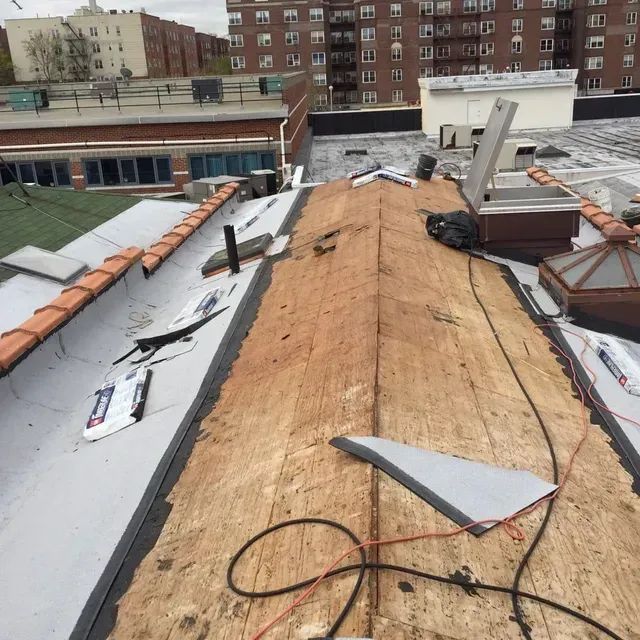
Rooftop with exposed wooden deck, partially covered with gray membrane. Skylight and buildings in background.
December 29, 2025
Choosing the right roof for your home or business is more than just a matter of aesthetics—it is a crucial decision that significantly impacts your property’s protection, energy efficiency, and long-term financial value.
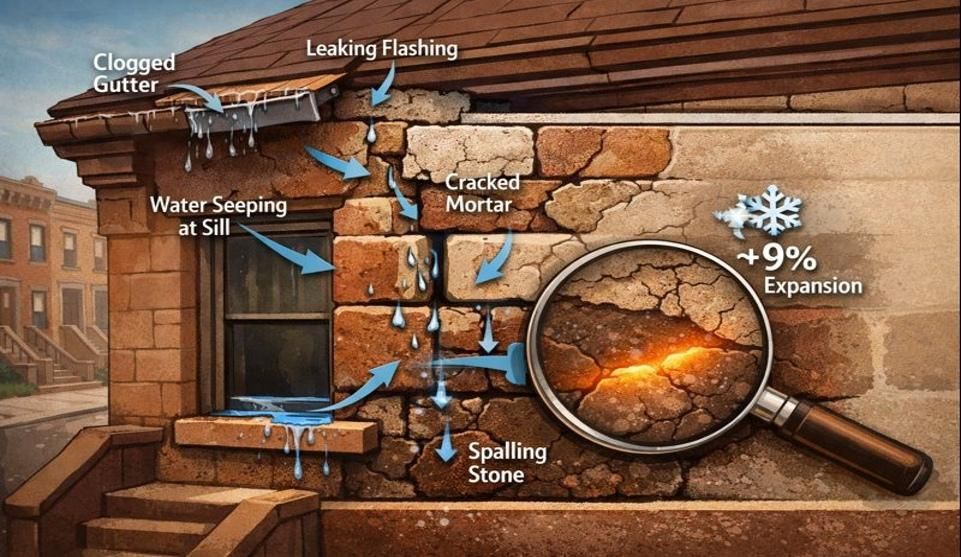
Brownstone cutaway showing water entry from gutters, flashing leaks, cracked mortar, and spalling.
By City Suburb Insights Team December 22, 2025
Choose patching when damage affects under 30% of the surface and surrounding stone is stable, while resurfacing handles widespread failure—both require fixing water pathways first.
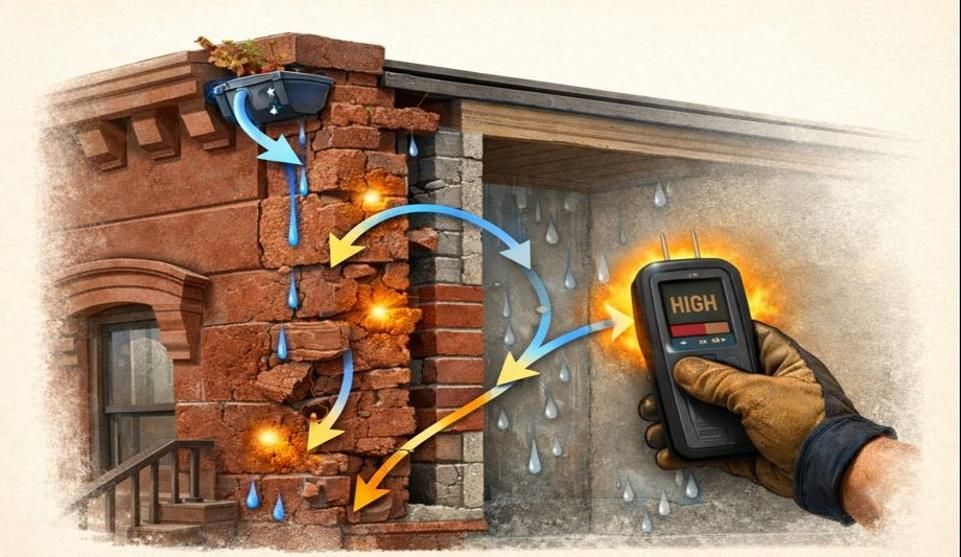
Brownstone cross-section showing water flow from clogged gutter to spalling areas; meter reads high.
By City Suburb Insights Team December 15, 2025
Brownstone spalling happens when trapped moisture freezes and expands by 9%, pushing the stone face off. Fix it by addressing roof drainage before patching.
Inspector photographing recessed mortar joint with deep gaps, efflorescence, and water intrusion.
By City Suburb Insights Team December 8, 2025
Mortar recessed deeper than 1/4 inch signals urgent risk—look for white efflorescence, stair-step cracks, spalling brick, and interior moisture before freeze-thaw damage spreads.
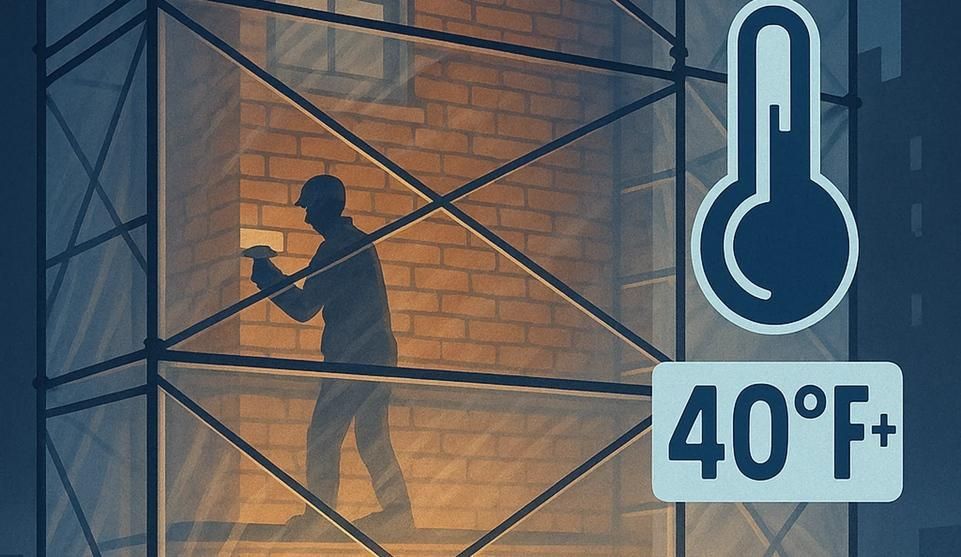
Worker repairing brick joints inside a heated, shrink-wrapped enclosure.
By City Suburb Insights Team November 15, 2025
Yes—brick pointing works in winter if walls stay above 40°F for 48-72 hours. Below that, cement hydration stops and joints fail by spring.
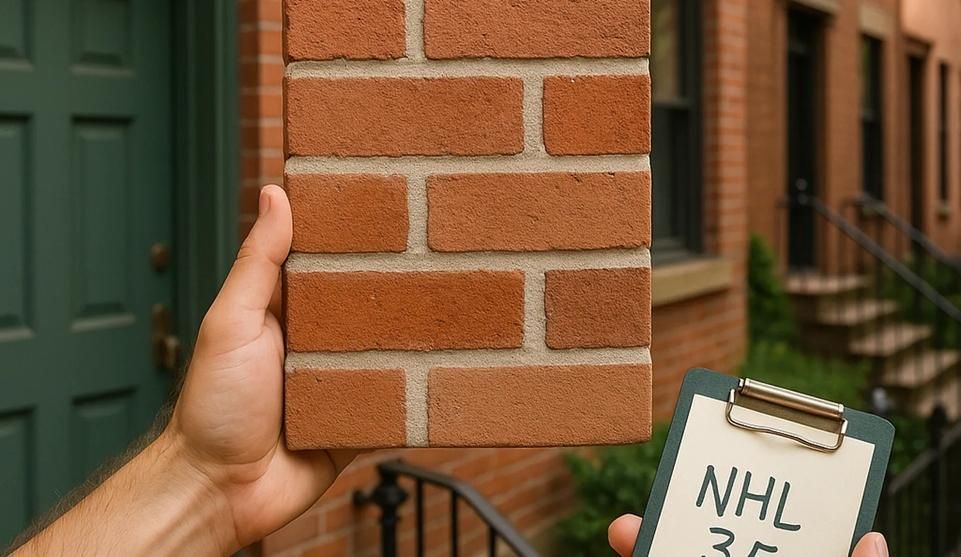
Hands holding a mortar test panel for color and texture matching during brick repointing.
By City Suburb Insights Team November 6, 2025
Lime mortar lasts 30-50 years on historic brick vs. 10-15 for cement. Lime breathes and flexes; cement traps moisture causing spalling.
By City Suburb Insights Team October 29, 2025
Paint over failing joints traps moisture and accelerates brick damage. The safe sequence: diagnose moisture, repoint with compatible mortar, cure, then coat.
By City Suburb Insights Team October 25, 2025
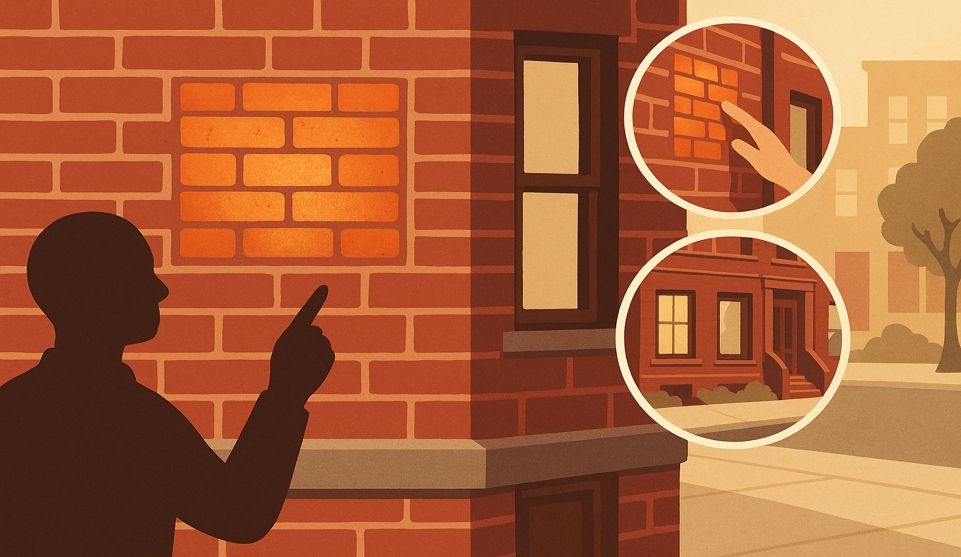
Perfect mortar match proven on the wall, not paper. Use neighborhood cues—brick firing, patina, joint profile—and approve daylight test panels first.
By City Suburb Insights Team October 21, 2025
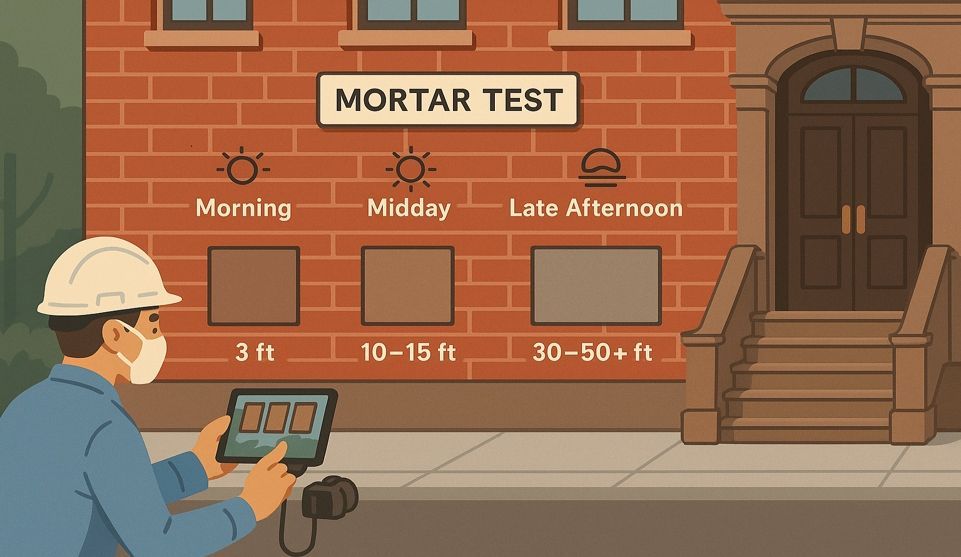
Review mortar test panels at 3 distances and 3 times of day—joint profile and sand texture shift color as much as pigment does.
By City Suburb Insights Team October 15, 2025
Review test panels at 3 distances under AM/Noon/PM light to validate mortar breathability, texture, and joint profile before NYC repointing.
Stylized on-wall mortar test panel (Variants A–C) being reviewed from a scaffold; mix tickets and ti
By City Suburb Insights Team October 10, 2025
Test panels catch mortar color mismatches before full repointing begins. NYC requires lime-based mixes weaker than brick to prevent moisture damage.
Illustration of a brownstone on-wall test panel with two mortar samples viewed from three distances
By City Suburb Insights Team September 27, 2025
Lime-rich mortar protects Brooklyn brownstones by staying softer than brick. Test panels reviewed at 10-15 ft reveal color shifts before scaling work.
Stylized illustration of a mason carefully repointing a brick joint with a CNMP clipboard and HEPA u
By City Suburb Insights Team September 22, 2025
NYC brick repointing takes 3-4 weeks with dust controls, CNMP filings, and 7AM-6PM work windows. What neighbors need to know about permits and protection.
Mason’s gloved hand applying a lime mortar test panel on a historic brick façade.
By City Suburb Insights Team September 16, 2025
Over-hard mortar stresses historic brick and traps moisture inside walls. Compatible lime-based mixes allow vapor escape and last 30+ years when done right.
Stylized cross-section of historic bricks with a glowing mortar ribbon stopping moisture, while miss
By City Suburb Insights Team September 11, 2025
Repoint before painting or coating—coating over failed mortar joints traps moisture, causing brick spalling and interior damage within months.
Stylized cross-section of a brownstone showing glowing lime mortar joint protecting brick, mason too
By City Suburb Insights Team September 6, 2025
Historic NYC brick needs lime mortar weaker than the brick itself—hard Portland cement traps moisture and causes spalling. Here's the right approach.
facade restoration
By City Suburb Insights Team August 28, 2025
Neglected facades can pose serious liability. This framework guides commercial building restoration to protect assets and reduce long-term risks.
facade restoration
By City Suburb Insights Team August 22, 2025
Quality materials like sealants, coatings, and flashing play a key role in building longevity, boosting durability and reducing maintenance costs over time.
facade restoration
By City Suburb Insights Team August 16, 2025
Guidelines for maintaining scaffolding and site safety during facade repairs, minimizing risks to tenants and pedestrians while work is underway.
brick pointing
By City Suburb Insights Team August 11, 2025
Quick-fix pointing often fails when mortar isn’t matched properly, creating hidden structural risks and long-term maintenance liabilities.
facade restoration
By City Suburb Insights Team August 6, 2025
A practical guide for property managers on creating a strong business case for facade restoration, highlighting costs, benefits, and long-term value.
More Posts